Japanese Woodblock Prints: Ukiyo-e
Posted on: 27 Feb 2023
in Articles/Blogs
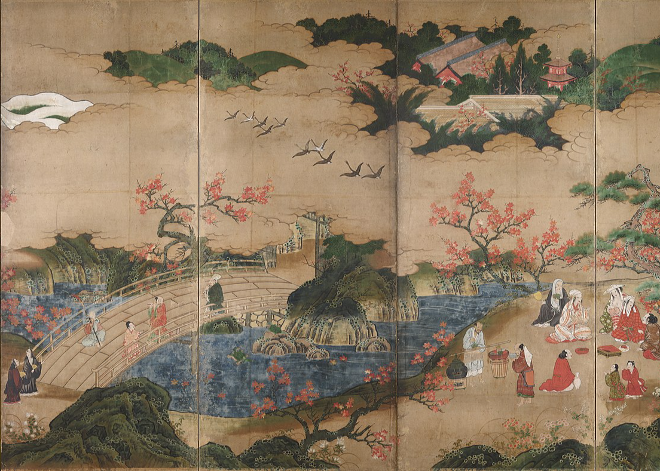
One method for art and design to grow is for artists to discover inspiration and influence in other art and design, often from different nations and cultures. Ukiyo-e is an art movement that has influenced both Japanese and Western art.
What began in Japan in the 17th century has found its way to contemporary Western art and design. In this post, we'll look at how Ukiyo-e design came to be and what it provided as it spread over the world. We'll talk about the qualities of Ukiyo-e design, famous painters, and how some businesses are combining them into their designs to create something distinctive and eye-catching.
What is Ukiyo-e?
Ukiyo-e is a kind of Japanese woodblock printing and art that dates back to the 17th century. This new painting style deviated from the usual hyper-realistic artwork that many artists aspired to at the time.
These designs were minimalistic, produced with simple line work and then expertly polished with bright colours. This juxtaposition of simple, focused design and brilliant, dramatic colour helps to bring the flat, two-dimensional design to life.
Rather than filling space with elaborate, distracting equivalents, Ukiyo-e concentrates on a single topic and employs deliberate linework and colours to highlight it against a natural and lovely background. Though there are several variants, these specific components identify it and distinguish it from other types of design.
Key characteristics of Ukiyo-e
- Bold or obvious linework
- Strong shapes and designs
- Unshaded, flat colour
- Imaginative cropping of figures
- Bold, vivid colours
- The art depicts usually depicts a very ordinary image
- Nature-oriented
- Expansive background with often asymmetrical placements of the main character(s) or focal point of the piece
Ukiyo-e design through the decades
Ukiyo-e returns to the Nara era (646-794), but it took off about 1603. And it actually began to blossom during the Edo era, from 1603 to 1867, one of the last stretches of traditional Japan.
The Edo period was characterised by internal tranquillity—politics were stable, the economy was booming, Japan was transitioning to a more urban culture, and the population was expanding.
When the merchant classes reaped the benefits of economic liberty, Ukiyo-e painting became the focus of attention in houses throughout Japan. This minimalist representation of culture, people's daily lives, and the environment was already popular among the merchant classes, but they could now buy the works themselves.
Ukiyo-e, which literally translates as "pictures of the floating world," depicted the affluent merchant elite and their playgrounds. During the period, "the floating world" referred to the licenced theatre and brothel areas of metropolitan Japan. This art was designed to remark on the luxurious tendencies of emerging privileged social strata while also becoming the artwork they devoured.
Artists began to add humans as the primary focus as Ukiyo-e grew increasingly famous. Paintings of geishas and courtesans (female performers) took centre stage. These works were created to fulfil commercial interests, which exploited representations of the female body and its attractiveness to promote apparel, pleasure male onlookers, and push beauty standards.
After understanding how valuable this was in the realm of advertising, it was eventually utilised to promote theatre events, functioning as ads, collections, and souvenirs. The artwork evolved dramatically towards brighter hues, depicting unusual makeup and expressive body language. The Kabuki theatrical prints were one of the most significant applications because they introduced fresh and exciting methods to disseminate theatre culture, which the newly affluent businessmen were especially fond of.
Apart from geisha prints and theatre prints, Ukiyo-e artwork also includes historical paintings that were exceedingly detailed and lavish, which opposed the customary style. It was employed to represent landscapes and "spring prints," however these were less popular than other well-known works. These last few additions took more work, but they now demonstrate the expansive nature of all that Ukiyo-e design has to offer.
Ukiyo-e design and Western culture
The International Exhibition in Paris, France, in 1867, introduced Ukiyo-e design to the Western world. From then on, Japanese art influenced Western works, and the name Japonism was developed to describe the popularity and impact of Japanese art.
Once the Western world grew acquainted with Ukiyo-e design, several prominent painters, including Van Gogh, Bonnard, Cassatt, and Monet, were inspired and incorporated similar methods in their own works.
Van Gogh is an example of Ukiyo-broad e's influence. When he discovered Ukiyo-e, it nearly totally changed the course of his career as an artist. Émile Bernard, a Van Gogh acquaintance, had begun using huge expanses of basic colours with powerful borders, and Van Gogh was finally motivated to follow suit. Much of what defines Van Gogh's legacy and distinguishes his work from that of many other Western painters is his use of Ukiyo-e style methods.
Ukiyo-e is still very much relevant in today's design environment. Apart from the ways it has crept into many of the techniques still in use today (sometimes without the artist's knowledge), the style of artwork is still actively being built upon and produced.
Its effect on graphic design has spread to the marketing sphere as well. Nowadays, many logos, artwork, posters, packaging, and ads employ their traits to depict scenes of nature and people, as well as the flat, uncomplicated, bold-coloured style. Ukiyo-e design demonstrates the adaptability of its traits and how it can be adapted to any brand.